In August, the Washington State Department of Health (DOH) reopened 360 acres of the Lummi Nation's shellfish beds in Portage Bay near the mouth of the Nooksack River. This brings the total area available for year-round harvest to 876 acres. A seasonal closure remains in effect from September 1 to November 30 for 440 acres of Lummi Nation shellfish beds.
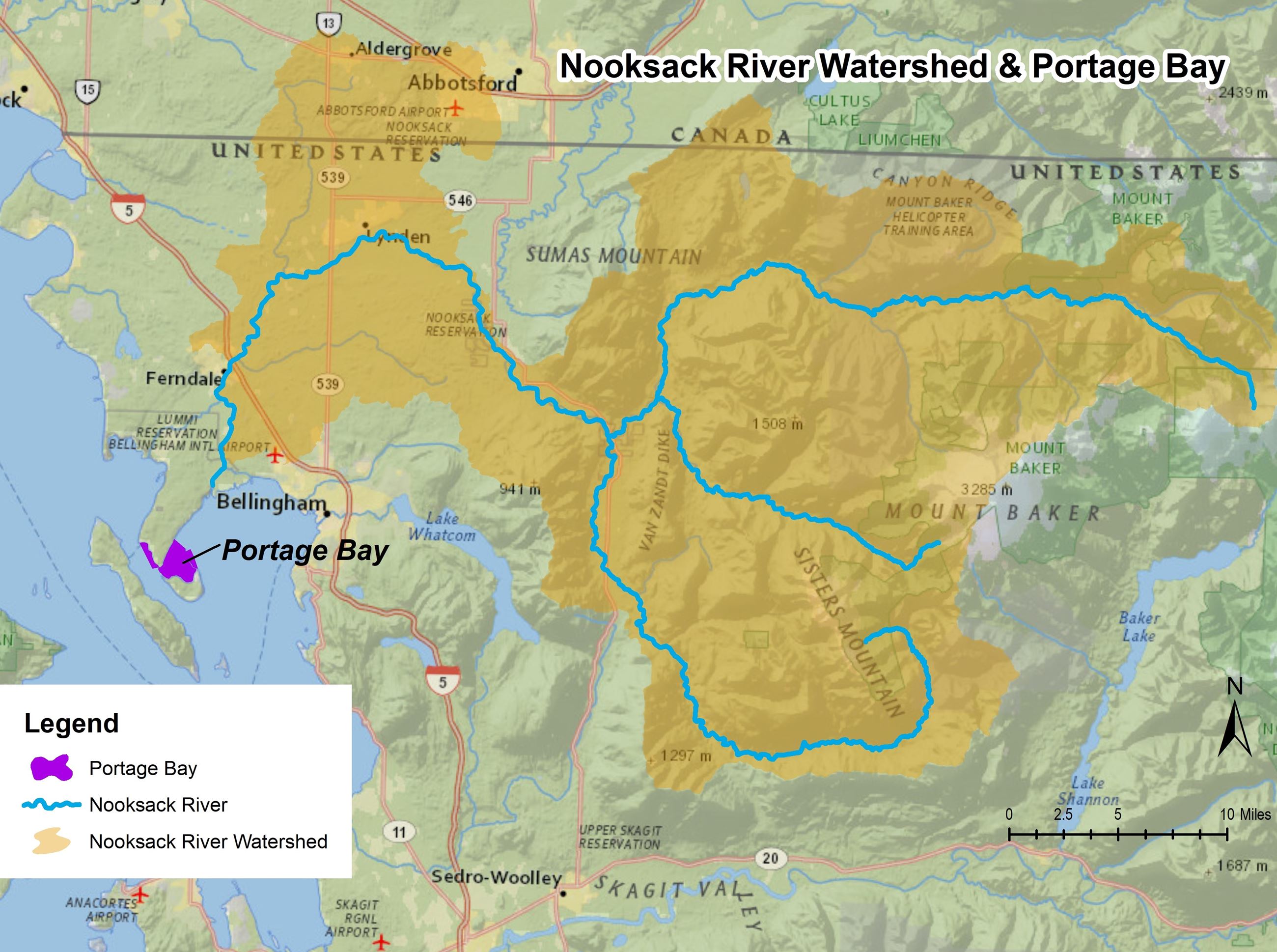
Map of Portage Bay and the Nooksack River Watershed. Portage Bay is located on the Lummi Nation Reservation and only open to tribal members.
DOH’s Shellfish Growing Areas Program works to safeguard public health by ensuring Washington-grown molluscan shellfish are safe to eat. The program evaluates growing areas through regularly testing water quality and inspecting shorelines for fecal bacteria pollution sources. Shellfish growing areas are classified based on pollution risk, and closures are implemented when water quality is compromised. The Nooksack River is the largest source of freshwater influencing Portage Bay. The Portage Bay growing area upgrade was based on an assessment of marine water quality data collected in the fall closure area, called the Conditionally Approved area, during the previously closed period of September 1 to December 31. It’s important to note that shellfish closures due to marine biotoxins are managed through a separate program and process at DOH.
The Portage Bay upgrades show that community members acting to keep local waterways clean and reduce bacteria pollution is having a positive impact. However, there is still much work to be done, as explained by Lummi Natural Resources: “The reclassification marks a positive milestone in our partners’ efforts to improve water quality. We must emphasize there is still much progress to be made as evidenced by the approximately 440 acres of productive Lummi Nation shellfish beds that remain closed for all harvest from September 1st through November 30th. There continues to be concerning levels of coliform bacteria coming on to the Reservation, which is located at the bottom of the Nooksack watershed. Therefore, we must continue to mitigate all pollution sources coming onto the Reservation that are harmful to the health of the Lummi People and the resources they rely upon.” The Portage Bay shellfish growing area is located within the Lummi Nation and is not open to the public for recreational harvesting.
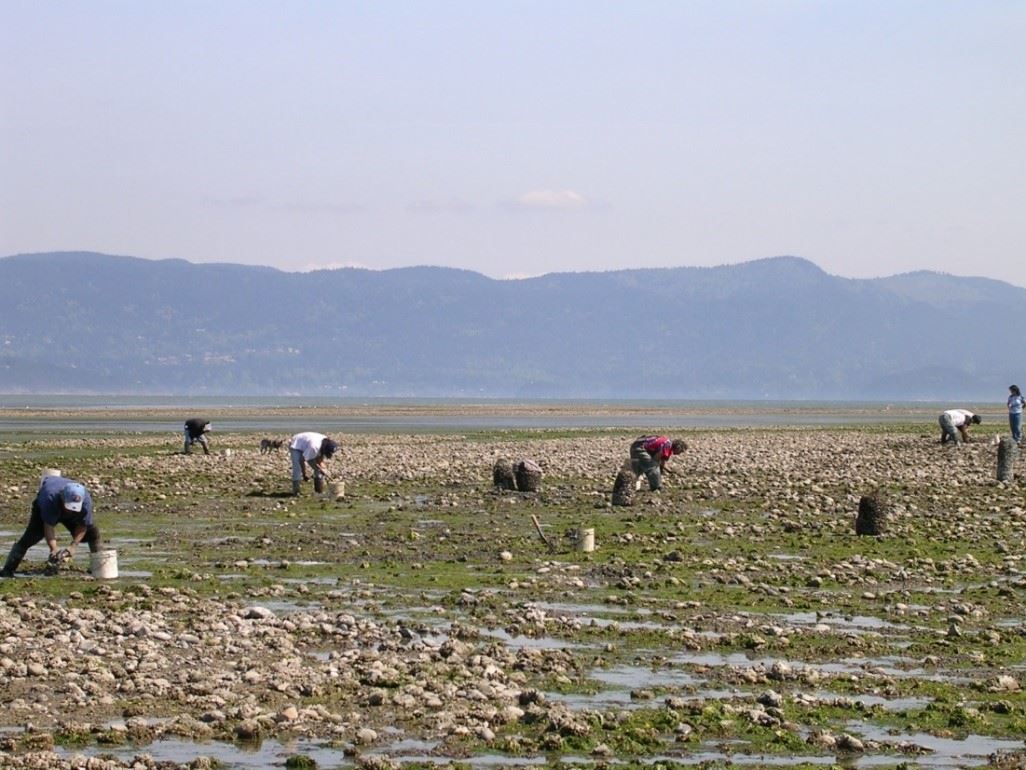
Lummi tribal members harvesting shellfish on tribally-owned tidelands of the Lummi Indian Reservation. Photo courtesy of Lummi Natural Resources Department.
Ongoing actions to reduce bacteria pollution from human waste include evaluation and repair of septic systems and work by municipal sewer utilities to maintain, improve, and expand their system. Activities to reduce bacteria pollution from animal waste include picking up dog waste, following manure spreading advisory guidance, fencing farm animals out of saturated pastures and waterways, managing manure and mud in pastures and storage areas, planting shrubs and trees along creek banks, and securing pet food to deter wildlife. Grants from the Environmental Protection Agency (EPA) National Estuary Program (NEP) supplement local and state funds to provide additional resources to address this large geographic area and its diverse sources of fecal-related bacteria.
Dorie Belisle, Portage Bay Shellfish Protection District Advisory Committee member, provides this perspective: “It has been a great learning experience to be part of the Portage Bay Shellfish Protection District Advisory Committee. We see the challenges in keeping our rivers and streams pollution free, as well as the results of a community pulling together. I am excited about the openings, but also encourage everyone to continue to be diligent and caring. WE must leave a legacy of clean water with healthy shellfish beds in Whatcom County.” The fall shellfish harvest closure in Portage Bay will remain in place as work continues to find and fix preventable bacteria pollution sources that result in high levels of bacteria in water during this period.
However, as we have seen, changes can be made through the combined efforts of community members. Fred Likkel, Executive Director of Whatcom Family Farmers and member of the Portage Bay Shellfish Advisory Committee reflects, “It is really encouraging after the work the community has done to see these Portage Bay shellfish beds reopen. Many community members, including our farmers, have been working on this issue since 2014. The recognition that a collaborative, community effort was going to be the best path to success has proven to be true. Kudos to all our community volunteers who have helped to get these beds open.”
We all play a role in keeping our community waterways clean! Learn what you can do to keep bacteria pollution out of local waterways and protect Whatcom County marine shorelines for safe shellfish harvest and recreational opportunities. Finding and Fixing Problems helps identify typical bacteria sources and actions we can each take to reduce fecal bacteria reaching our waterways. Because nonpoint pollution comes from many small sources (often common activities), there are many small steps we can each take to make a difference!
For more information about Nooksack River watershed water quality and programs visit the Whatcom County Public Works – Natural Resources website at http://www.whatcomcounty.us/1072/Water-Quality. You can also find resources for landowners on the following webpages:
Finding and Fixing Problems
Small Farm Workshops and Rebate Program
Septic System Workshops
Septic Maintenance Rebate Program
For more information, contact: Ingrid Enschede, Senior Water Quality Planner by phone at (360) 778-6229 or via email [email protected]